
If you already pay for Claude, you can use that subscription to build whole apps. Claude Code on your plan writes the code, and Rock8Cloud gives it the guidance and the tools to ship them.
Every app starts from a blueprint: a proven stack, already set up to deploy. There are blueprints for APIs, dashboards, websites, a CMS and AI agent workflows, with or without a database, and Claude picks the one that fits your idea and adapts it to your use case. It spends your plan’s usage on your features instead of the setup, and the predefined stack keeps it within boundaries that are known to work.
In the session above, one prompt became a URL shortener with click analytics, live at its own URL, with the code in a GitHub repository its owner keeps. Here is every step, so you can do the same with your own idea.
- You need
- A Claude plan with Claude Code, and Rock8Cloud connected. 30 days free, no card.
- You type
- One prompt with your idea, then three answers.
- You get
- A full-stack app live at its own URL, with the code in your GitHub.
Not connected yet? Do that first. It takes a minute, in the Claude app or with one command in Claude Code.
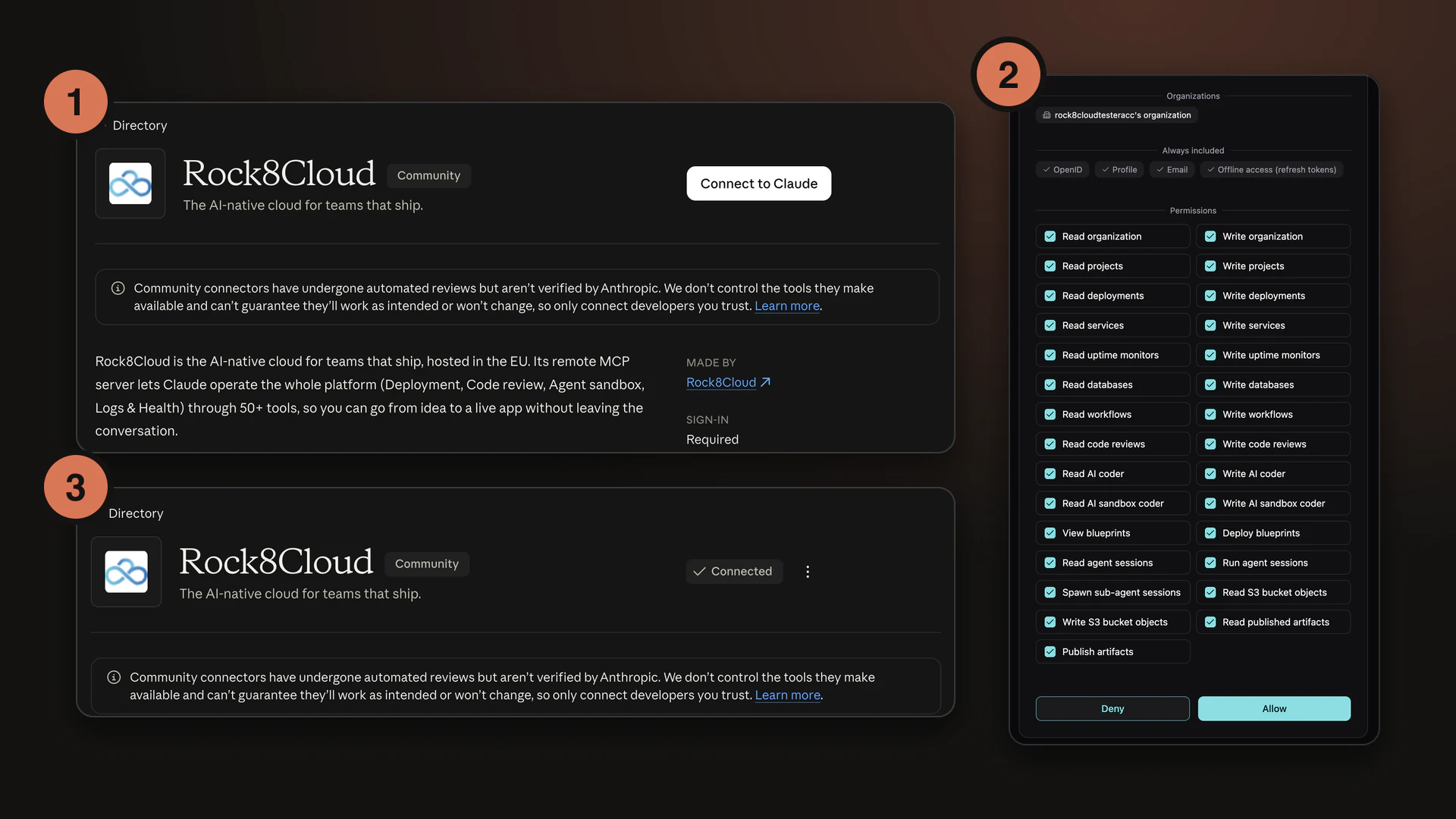
Build it, step by step#
- Describe the app. In Claude Code, ask for the app and name the organization it should run in. The session above typed one line,
lets build an url shortener app with click analysis on rock8cloud, the production firefighter org - Pick the blueprint. Claude lists the stacks that fit and recommends one. Pick it, the GitHub account the code goes to and a name for the project.
- Let Claude build. Rock8Cloud forks the blueprint into your GitHub and starts the first deploy. Meanwhile Claude clones the repository, writes the features, tests them locally and pushes. Every push redeploys.
- Open the live URL. Claude ends with the address, what the app does and what to change before real use.
- Ask how it runs.
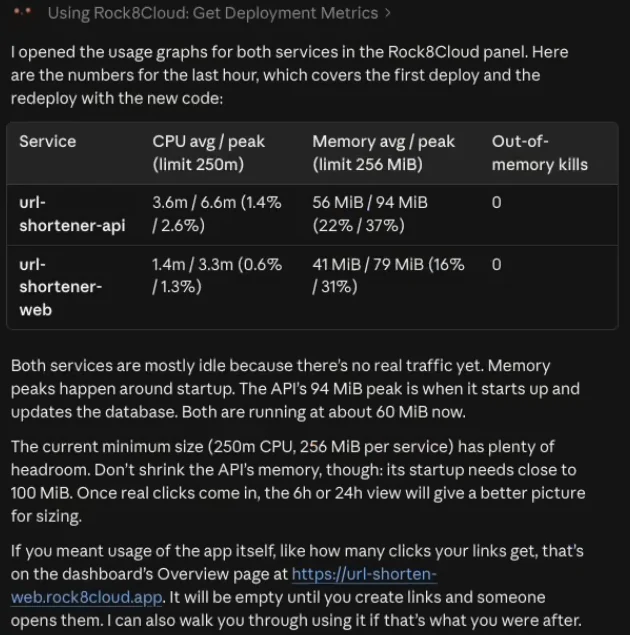
can you show me usage of the app ?puts the CPU and memory graphs of both services in the chat.
In the session above that took one prompt and three answers. The rest is Claude’s work, quoted below as it happened.
 View
Viewlets build an url shortener app with click analysis on rock8cloud, the production firefighter org
list_github_owners
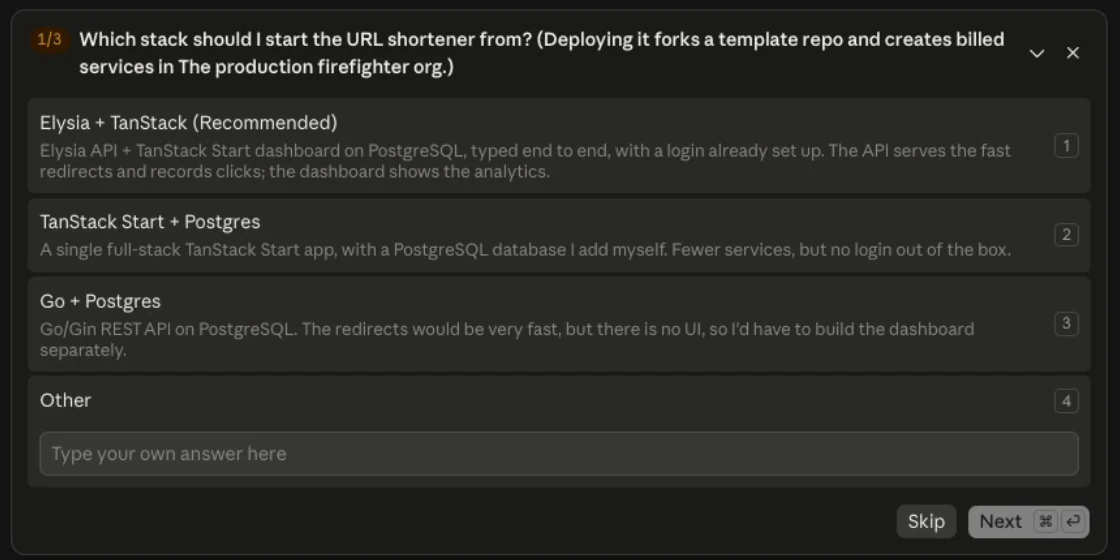
Which stack should I start the URL shortener from? (Deploying it forks a template repo and creates billed services in The production firefighter org.)
Elysia + TanStack (Recommended): Elysia API + TanStack Start dashboard on PostgreSQL, typed end to end, with a login already set up.
Elysia + TanStack (Recommended) · farmasek · url-shortener
 View
Viewdeploy_blueprint
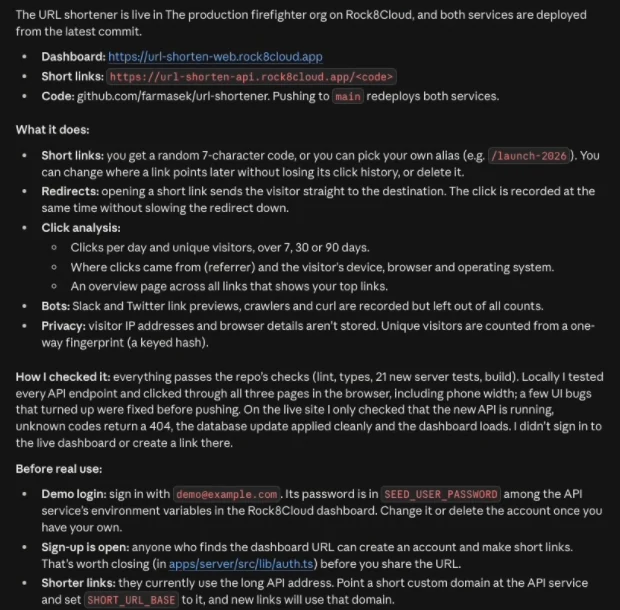
The URL shortener is live in The production firefighter org on Rock8Cloud, and both services are deployed from the latest commit.
Dashboard: https://url-shorten-web.rock8cloud.app
Code: github.com/farmasek/url-shortener. Pushing to main redeploys both services.
 View
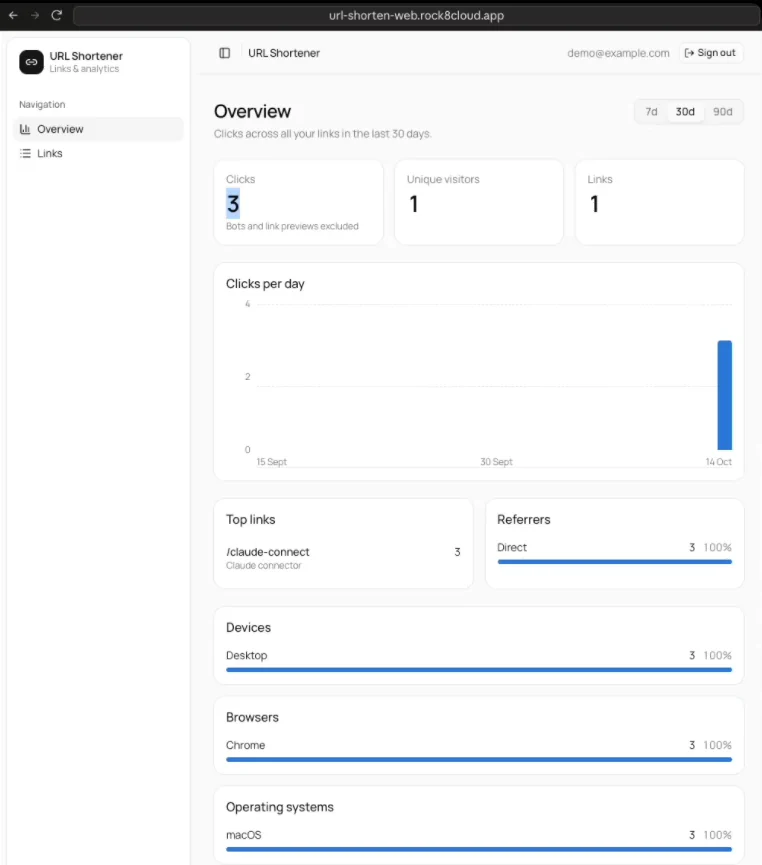
ViewClick analysis: clicks per day and unique visitors, over 7, 30 or 90 days. Where clicks came from (referrer) and the visitor's device, browser and operating system.
 View
Viewcan you show me usage of the app ?
show_usage
get_deployment_metrics
I opened the usage graphs for both services in the Rock8Cloud panel. Here are the numbers for the last hour, which covers the first deploy and the redeploy with the new code.
Both services are mostly idle because there's no real traffic yet.
What you end up with#
- A proven starting stackA verified blueprint: an Elysia API and a TanStack Start dashboard on PostgreSQL, typed end to end, with login already set up.
- Live from the first deployIts own HTTPS address on rock8cloud.app, hosted in the EU. Every push to main redeploys.
- In your GitHubForked into your own account as a private repository. The code is yours.
- Yours to take anywhereAn open-source stack in a plain repository, so it runs wherever you want to run it.
- Built on your Claude planClaude Code writes it on the subscription you already pay for. Rock8Cloud hosts it, 30 days free, no card.
- Nothing billed without youClaude asks before it forks a blueprint, deploys or changes anything you pay for.
Build yours#
Pick the app you keep putting off. Describe it the way you would to a colleague, name the organization, and let Claude pick the blueprint.
See what else Claude can do#
Start your next app from another stack, or let Claude look after the ones already running.
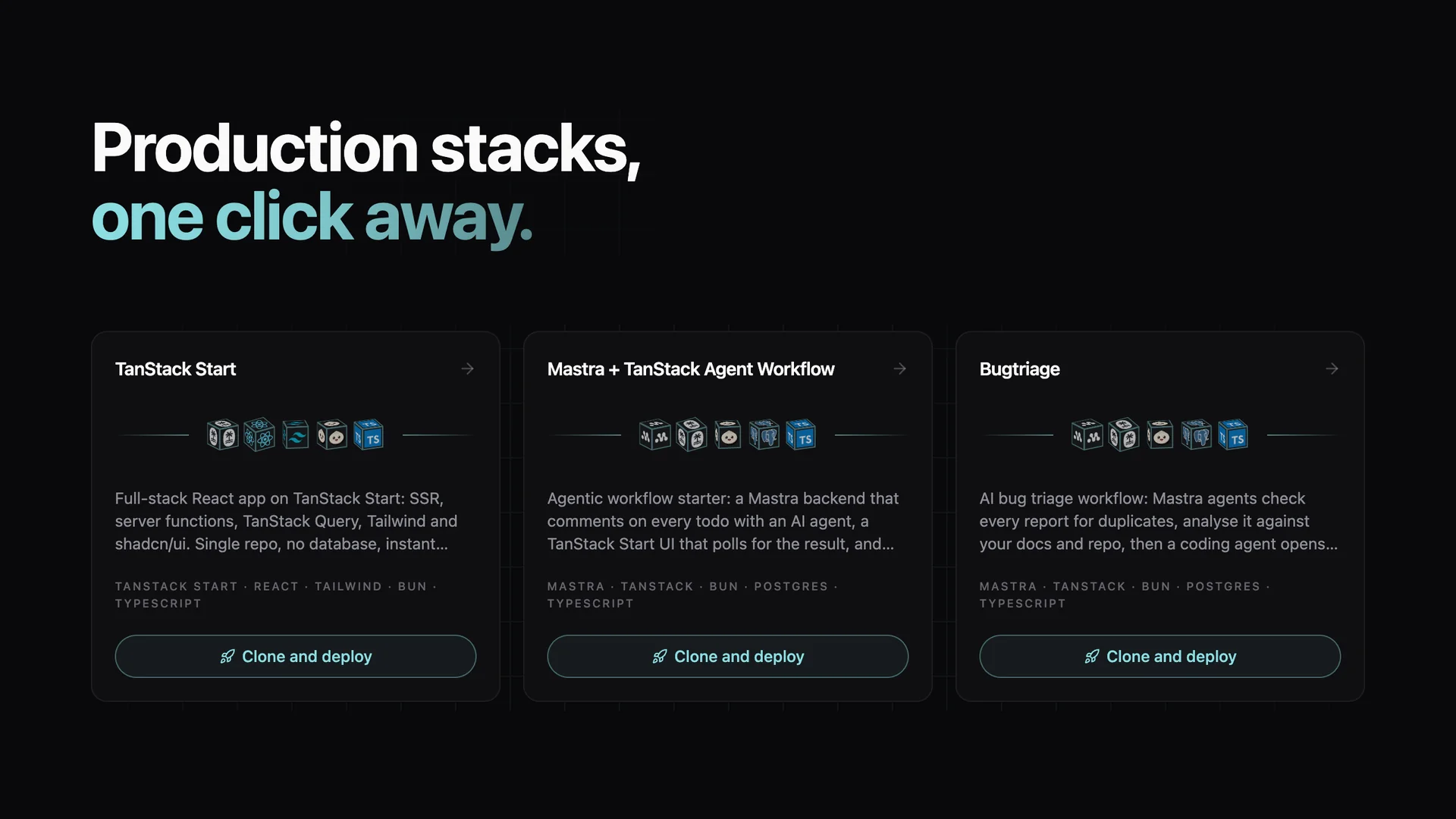 Blueprints · CatalogStart from another stackGo, Java, Kotlin, Vue, Astro, Strapi with Next.js, AI agent workflows and more. Each one forks into your GitHub and goes live in minutes.Browse the blueprints
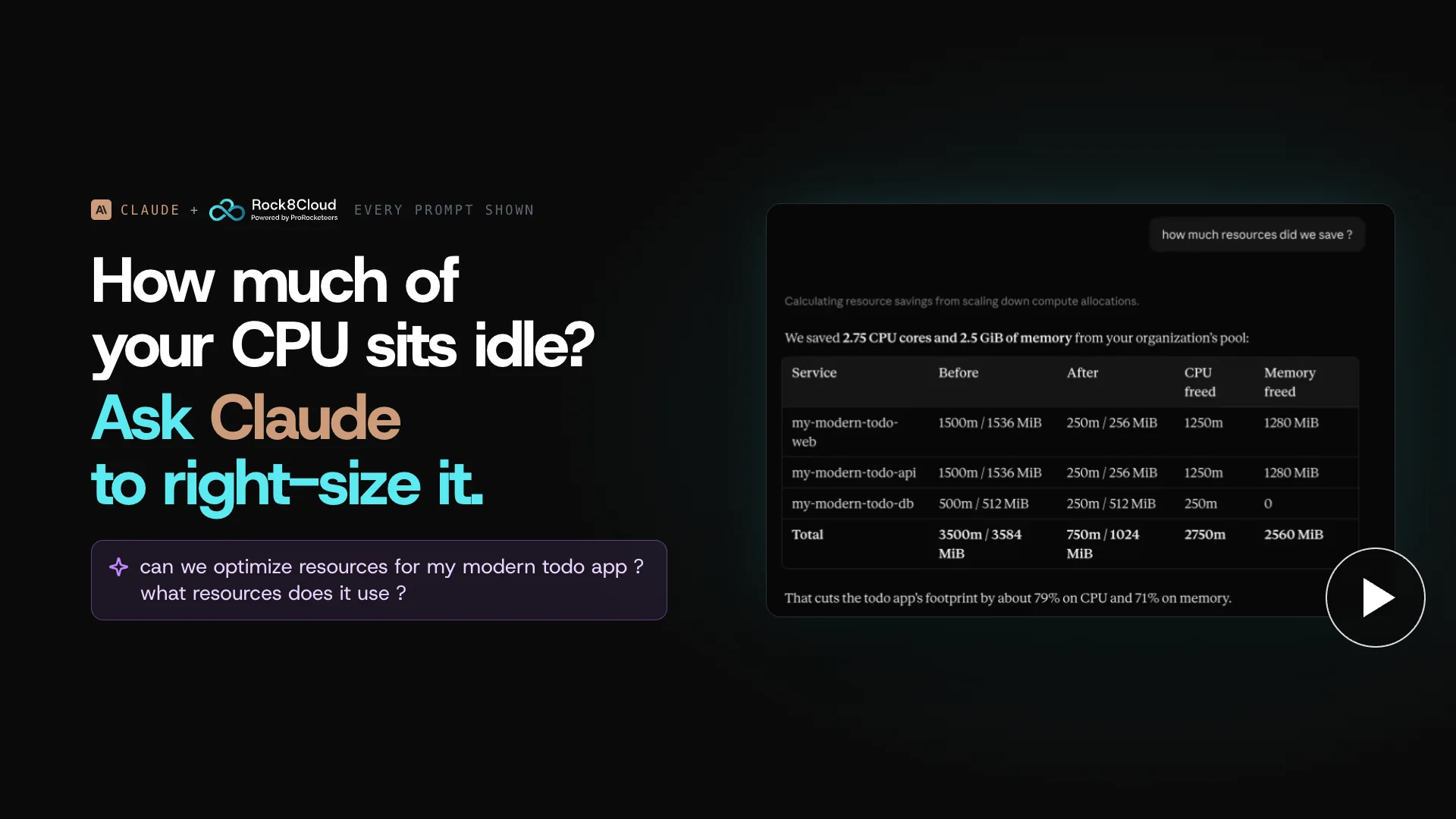 Use case · 2 min videoUse Claude to optimize the resources your apps useClaude reads real usage, proposes sizes that fit and asks before it applies them. In this session, 2.75 CPU cores went back to the pool.Read it