
Grok plans the work, Grok Build writes the code, Rock8Cloud gives it a starting stack and real hosting, in the EU. Connect the chat, the terminal or both.
What you need#
- Grok on grok.com. On Grok Business and Enterprise, an admin may need to enable connectors for the team first.
- Grok Build, xAI’s terminal coding agent, if you want it to write the code.
- A GitHub account. You sign in with it during setup, which creates your Rock8Cloud account if you don’t have one yet.
Connect the Rock8Cloud MCP to Grok or Grok Build#
Both reach the same server and end with the same GitHub sign-in.
-
Open connectors. Go to grok.com/connectors, click New Connector and pick Custom.
-
Point it at Rock8Cloud. Enter
rock8cloudas the Name andhttps://app.rock8.cloud/mcpas the Server URL, then click Add Connector.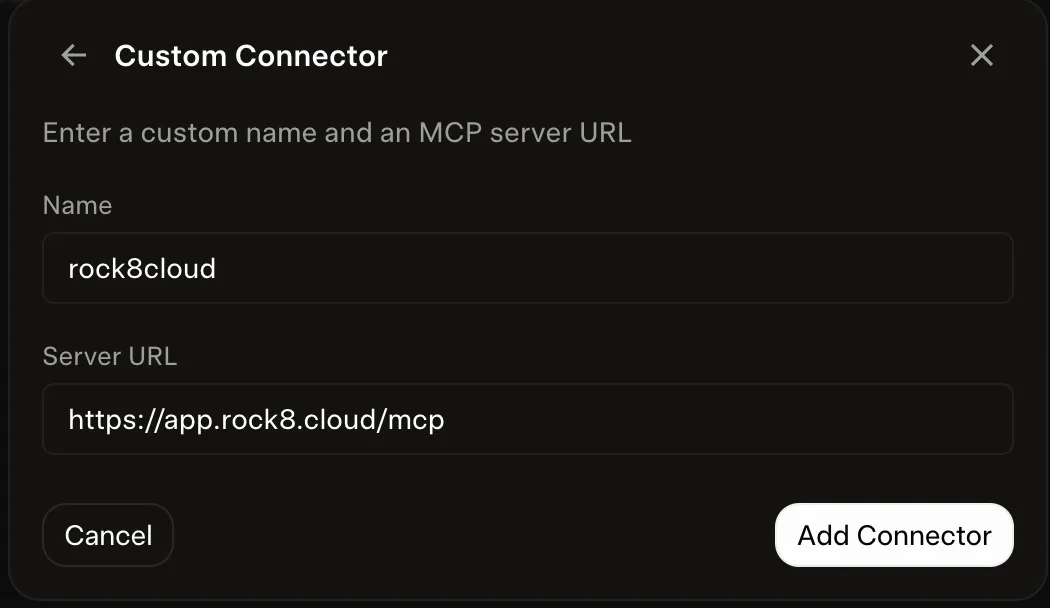
Add the custom connector -
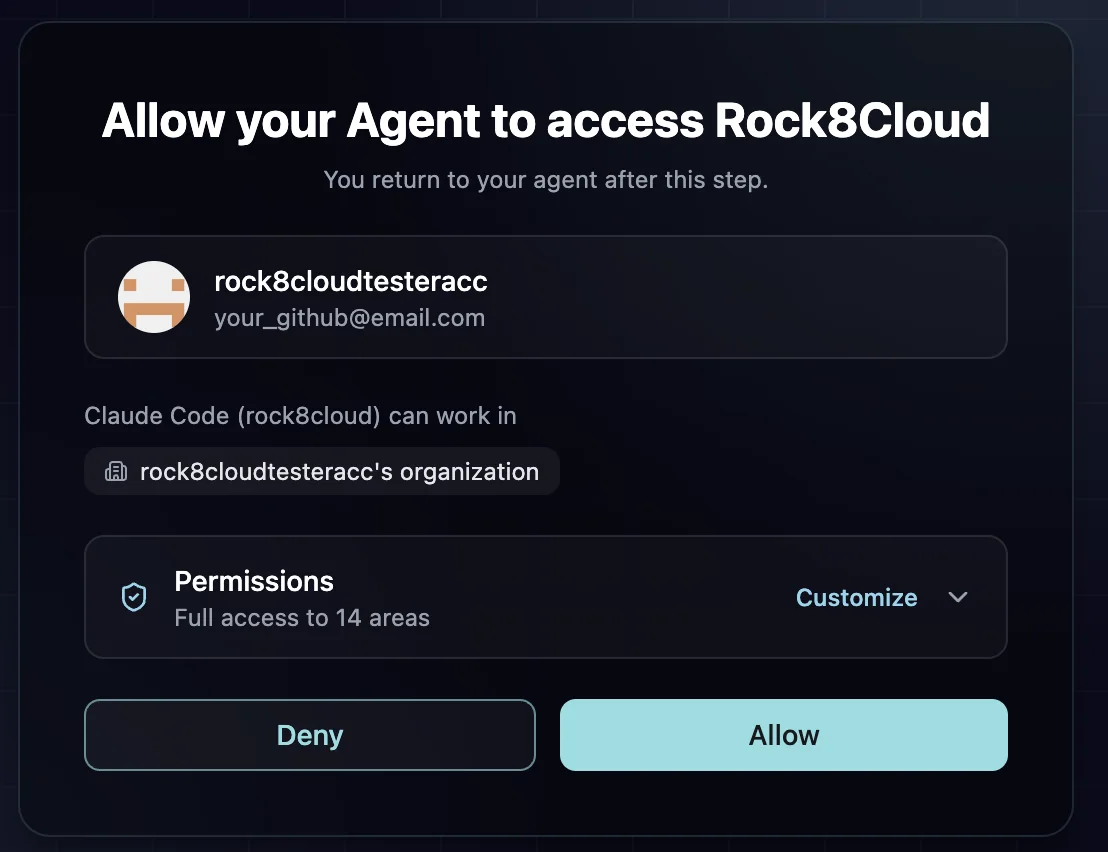
Sign in. Grok opens Rock8Cloud in a popup and walks you through Sign in with GitHub, Connect GitHub (you can skip it for now) and Allow access. Open Customize to turn permissions off before you click Allow. No API key, no secret in a file.
-
Check it. Start a new chat and ask what is running in one of your organizations.
- Add the server. In a terminal:
grok mcp add --transport http rock8cloud https://app.rock8.cloud/mcpOr add it to ~/.grok/config.toml yourself (.grok/config.toml for one project):
[mcp_servers.rock8cloud]
url = "https://app.rock8.cloud/mcp"
Grok Build also loads the project’s .mcp.json, so a repo already set up for Claude Code works as is.
- Sign in. The first time Grok Build uses a Rock8Cloud tool, it opens Rock8Cloud in your browser. Go through Sign in, Connect GitHub and Allow access, and the token stays with Grok Build.
- Check it. Run
grok mcp doctor rock8cloud, then start a session and ask what is running.
Grok on grok.com and Grok Bot are separate connections. Adding Rock8Cloud to one does not add it to the other.
You decide what Grok may do#
Grok asks before it runs a Rock8Cloud tool, so nothing changes without your confirmation. In Grok Build, its permission mode decides whether a tool call waits for you. Reading logs and status is safe to approve as it comes. Deploys, environment variable writes and published pages each wait for your click. Tools that delete or overwrite something are marked as destructive, and deleting a project or a service needs an explicit confirmation on top. The Customize step during sign-in limits what the connector can reach at all, for example read-only access to deployments.
What you can do with it#
Every tool, with example prompts, is on the MCP primitives page. Some ideas to start with:
Build a proper prototype from a verified blueprint
Start from a verified repository with a local stack, spend tokens on your idea instead of scaffolding, and get a live URL from the first deploy.
Prototype a team dashboard from a blueprint
Ship your repo with its database
Build, database, env vars and a live URL in one step. Every push redeploys, and your own domain is one more prompt.
Deploy my GitHub repo on Rock8Cloud with a Postgres database
Find out why a deploy failed
Build and runtime logs read straight into the chat, so the fix starts from the evidence, not a guess.
Why did the last deploy of the API fail?
Add a database, cache or storage
PostgreSQL, Dragonfly (Redis) or S3 storage, linked into your service as env vars.
Add Redis to the API and link it
Share your work as a page
Reports, previews and summaries get their own rock8cloud.page link, public or password-protected.
Publish this report as a page for the team
Hand a task to a cloud agent
An agent works in its own sandbox with its own copy of the repo and comes back with a pull request and a preview.
Have an agent fix the flaky checkout test
Check what is running
Every service with its uptime, plus CPU and memory usage against the limits.
What is running in production, and is anything close to its limits?
Catch problems before they ship
Critical dependency vulnerabilities and code review findings, with the fix to apply.
Any critical vulnerabilities in my services?
Why run your apps from Grok#
Plan in Grok, build in Grok Build#
Ask Grok for a prototype and it starts from a verified blueprint instead of a blank folder. Rock8Cloud forks the stack into your GitHub account with its database, deploys it and hands back a live URL. Writing a whole app through a chat is slow, so open Grok Build in a clone of the fork: it writes the code in the real repo, and every push redeploys. You own the code from the first minute.
Ship and fix without opening a dashboard#
Grok deploys a repo, follows the build and reads the logs when something breaks. Ask why a deploy failed and the answer starts from the real build output. Ask what is running and you get every service with its state, uptime and resource usage, in the same conversation where you plan the next change.
Results other people can open#
A report, a changelog or an HTML preview Grok writes can go live as a page at its own rock8cloud.page address, public or behind a password. Send the link to your team instead of pasting a wall of text.
Hosted in the EU#
Your services, databases and pages run in EU data centers, and the MCP server Grok talks to runs on the same platform. Rock8Cloud is built in Czechia.
Good to know: deploys come from GitHub. Connect it during the sign-in, or Grok gives you a link when a deploy needs it. Push before you deploy. Anything billed is confirmed with you first.
Troubleshooting#
The connector fails right after Allow access. Delete the Rock8Cloud connector in grok.com/connectors and add it again. Grok then registers a fresh client and repeats the sign-in.
The sign-in popup does not open. Allow popups for grok.com and add the connector again.
Grok Build does not list the Rock8Cloud tools. Run grok mcp doctor rock8cloud, then start a new session.
Grok answers without using Rock8Cloud. Start a new chat and name Rock8Cloud in the question, for example “Using Rock8Cloud, what is deployed in my organization?”.
The answer is about the wrong organization. Name the organization in the question.
Next: control Rock8Cloud from Grok Bot · control Rock8Cloud from Claude · control Rock8Cloud from ChatGPT and Codex.